



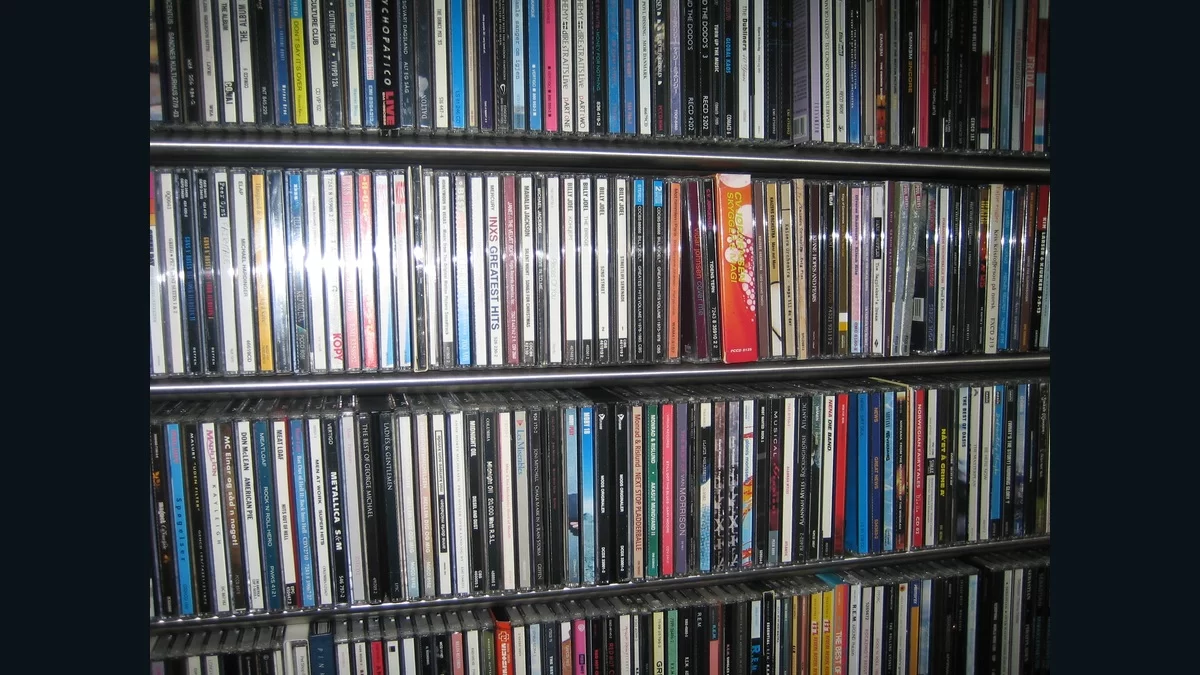
You know an album is older than the date beside it. Perhaps you owned it at school, yet a listing now gives it a year from the last decade. Check the edition before changing that year. The date beside a particular CD can describe that CD's issue, even if the album had reached listeners years earlier.
Suppose the newer listing is for a CD reissue. Its issue year can be useful even though the album is much older. Keep it until you've identified the edition. You can then decide which date belongs in your listening notes and which describes the copy on your shelf.
The album and the edition are different things
MusicBrainz's release-group documentation makes a useful distinction. Its release group represents the overall album concept, while a release represents a particular issue, such as a CD or digital download. Different regional editions can belong to the same group. For example, a Japanese issue and a European issue can have separate dates while still belonging to one album group.
MusicBrainz is explaining its own catalogue here. A shop or player may present its dates differently. It still gives you a good question to ask of any listing: am I looking at the history of the album, or at one product made from it?
In the companion release documentation, MusicBrainz defines a release date as the date that issue was released. Country, label, catalogue number, barcode, packaging and cover art can help distinguish one issue from another. A title on its own may leave you with several possible matches.
Try a three-date example
For a hypothetical collection, give an album three entries in your notes: its first issue in 1998, a CD reissue in 2012 and a further edition in 2026.
A history of this imaginary album would start in 1998. The person selling its 2012 CD needs to identify that later issue as well. And a preorder for the third edition needs 2026 on the page. Changing every reference to 2026 would lose the album's earlier history; changing every reference to 1998 would make the newer products harder to identify.
For one more part of the same imaginary history, suppose the recording came from a concert in 1997. That gives you a performance year of 1997 and an initial issue year of 1998. Label them 'recorded 1997' and 'first issued 1998'. The words keep the performance separate from the release when you return to the note later.
Find the copy before judging the year
Copy the label and catalogue number from the edition you're checking. Look on the spine or near the barcode: MusicBrainz names both as common places to find the label's number. Its documentation also warns that an ASIN is a different identifier. Don't substitute that retailer code for the catalogue number when you're comparing issues.
Now compare the format, track order and bonus material with the listing. A familiar cover can point you towards the album, but matching those edition details gives you more to work with.
A later date doesn't, by itself, prove a remaster. It also doesn't establish a new mix, extra songs or better sound. Those changes need their own credits or product description. Our remaster and remix guide explains why an edition's audio claims deserve a separate check.
You can use that same distinction in your own collection notes. A short entry might read: first released 1998; this CD issued 2012; label and catalogue number checked against the packaging. Add a recording date only when you have a source for it. You can preserve the history without pretending all the dates mean the same thing.
When a seller and a package give different dates, keep the source beside each one while you investigate. Check whether the listing describes the same label, country and format as your copy. If you can't match the edition, say so in your notes. You can come back to an unresolved date later without losing the evidence that caused the question.