



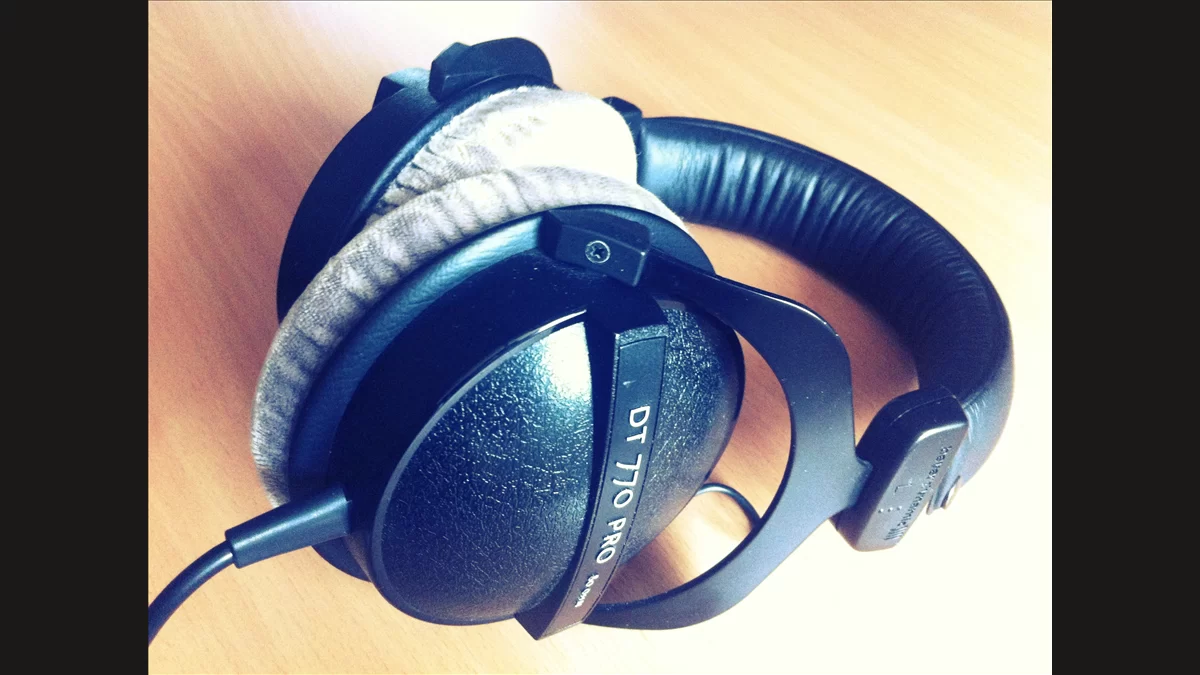
Beyerdynamic sells three versions of the classic DT 770 PRO. The one marked 32 ohms has a 1.6 m lead, while the 80-ohm model gives you three metres of straight cable. The 250-ohm cable coils. Those are differences you'll notice before you hear a note, so start with where your headphones will plug in.
This guide uses Beyerdynamic's published specifications and an electrical calculation. MP3Raid has not physically tested these headphones. All three are wired, closed-back, over-ear headphones. The comparison here concerns the connections and the supplied parts.
What changes when you select a version
| Classic version | Supplied cable | Supplied pads |
|---|---|---|
| 32 ohms | 1.6 m straight | Black leatherette |
| 80 ohms | 3 m straight | Silver-grey velour |
| 250 ohms | 3 m coiled | Silver-grey velour |
Beyerdynamic puts the 32-ohm version in its mobile category. If your phone has no headphone jack, include the adapter in your decision. It has to work with your phone, and its audio output is the one that will drive the headphones. A 3.5 mm socket on the adapter tells you the plug will fit. For voltage, look at the adapter's specifications.
On a desk, trace the route from your interface to your chair. Will the lead drop straight down beside you, or does it need to clear a monitor stand? The 80-ohm version gives you a straight lead for the latter route. A coil behaves differently as you move. Beyerdynamic lists three metres for the 250-ohm cable, so check how much slack you actually need before routing it around furniture.
On a used pair, ask for a picture of the impedance marking and the cable. Pads can have been replaced, so a velour pad on its own can't reliably tell you which version is for sale. Compare the listing with the label before you order parts or use the table to identify the headphones.
What to check on your headphone output
Suppose each version receives one milliwatt. Treating the nominal impedance as a resistive load for this example, the RMS voltage is the square root of power in watts times resistance in ohms. That comes to roughly 0.18 V for 32 ohms, 0.28 V for 80 ohms and 0.50 V for 250 ohms. The 250-ohm example takes about 1.77 times the voltage of the 80-ohm example at that same electrical power.
One milliwatt is just a common point for the comparison. To estimate loudness, you'd also need the headphones' sensitivity and the actual output available into that load. For more on what the ratios mean, see our guide to power, voltage and decibels.
Look up the headphone output of the device you will actually use. A power figure quoted at 32 ohms describes that load. If you're considering 250 ohms, look for the maker's voltage or power figures into a comparable load before deciding you need a separate amp. A 3.5 mm to 6.35 mm adapter can solve a plug-size problem, but it cannot add voltage.
When the cable needs to come off
If you pack the headphones frequently and want to unplug the lead at the cup, look at the full model name. Beyerdynamic lists a detachable cable on the separate 48-ohm DT 770 PRO X. The company also lists spare cables for the classic DT 770 PRO, but a repair part and a lead you can unplug for packing serve different purposes. Check the exact model and cable arrangement in the listing before buying.