



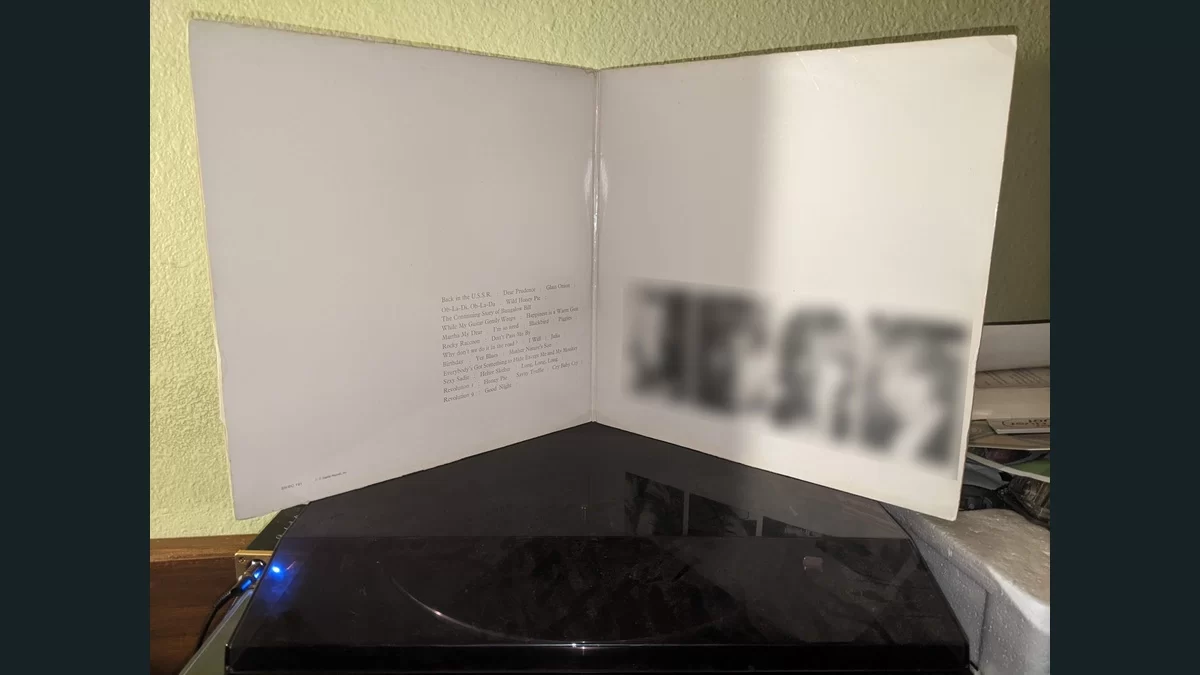
Buying a record for its booklet or inside artwork? Get a picture of those parts before paying. A listing that says “gatefold” is describing a jacket that opens like a book. It hasn't yet told you how many discs come with it, or what loose items are included.
You might be perfectly happy with a single record in that jacket. Or you might be expecting a double album because of the way the sleeve looks. Write down the disc count separately so that an attractive photograph doesn't make the decision for you. This is a source-based packaging guide; MP3Raid has not inspected a sample or compared the sound of any editions for it.
Count the records separately from the pockets
Pressing manufacturer Vinyl Plant describes gatefold jackets with one or two pockets. Its examples include using a pocket for an insert or booklet. The fold, the pocket count and the number of discs are therefore separate things to check.
Nor does a double LP have to come in a gatefold. The same manufacturer offers wider spines on single-pocket jackets for double or triple LP albums. Its catalogue shows why it is worth asking: two discs can be housed together without that book-like fold.
Look at the edges as well as the artwork. Where does each record slide in? An opened-out photograph can show the inner panels beautifully while leaving the pocket openings out of view. The seller may need to take another picture from the side.
The outer cardboard jacket, the inner sleeve around a record and a separate protective plastic sleeve do different jobs. Vinyl Plant describes inner sleeves as protection against scratching and dust. If a seller says “new sleeve,” ask whether they mean a fresh inner or a replacement cardboard jacket. You would be receiving rather different things.
Try reading these two descriptions
Here are two invented listings to work through: “1LP, gatefold, booklet included” and “2LP, single-pocket jacket.” The manufacturing options above allow both. In the first, you're being offered one record and a jacket that opens out. In the second, you have two discs, but no promise of a fold-out interior.
If you want the notes, follow up on the first listing: does the seller have that booklet in hand? For a used record, a photograph of every loose item is much more useful than a stock photograph of an unopened new package.
If your priority is the music, begin with the track list and edition details on both listings. The packaging terms cannot establish whether you are getting the same mix, mastering or selection of songs. Our remix and remaster guide covers that next part of the comparison.
A more elaborate jacket may be a reason to choose an edition for its presentation. We have no basis here for treating it as an audio upgrade.
Ask for four useful photographs
Before ordering a copy whose packaging matters to you, request:
1. The jacket opened out, including the centre fold and both inner panels.
2. The spine and pocket openings, so you can see how it holds the contents.
3. All discs, inner sleeves and loose inserts laid out together.
4. The catalogue details on the jacket and labels, readable enough to compare with the edition description.
For a used copy, ask about splits, tears or repairs around the fold and openings as well. The photographs establish what is present and visible; they do not tell you how the record plays. Keep the seller's playback and condition description alongside them.
Vinyl Plant also lists trifold jackets with one, two or three pockets. There is no shortcut in the extra panel: you still need the contents for that particular copy. Keep the photographs and the seller's description together, especially when a booklet or insert is the reason you've chosen it.