



The numbers on the sleeve can refer to two different things. Seven inches is the size. The speed is usually 45 RPM or 33 1/3 RPM, depending on the copy. That goes for a small centre hole as well as a large one. United Record Pressing calls the format “45s” in its catalogue and offers both speeds in the very same listing. United Record Pressing’s catalogue.
The quickest answer is often right there on the disc. Look beside the catalogue number on each label. The sleeve may say 45, but does its number match the record inside? If you got it second-hand, it’s possible that someone put it in a different sleeve. Search the dead-wax markings if two listings for the same title look alike. Our guide to the marks in the runout.
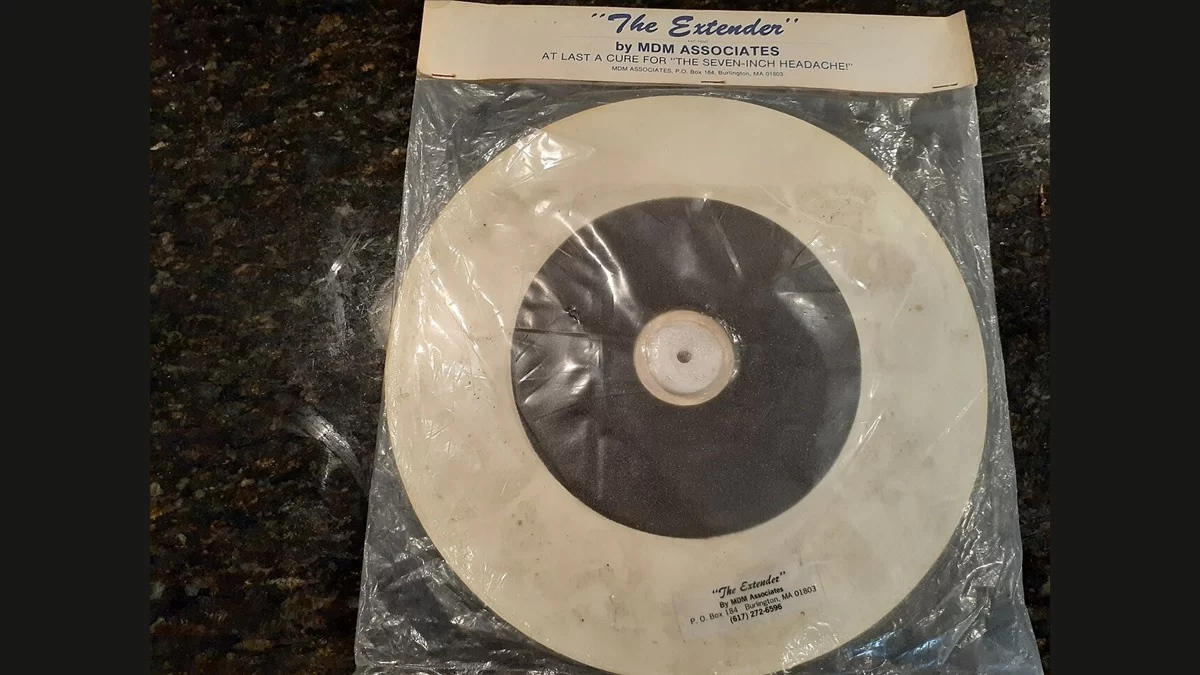
If the hole is too big for the spindle, the adapter pictured here can help explain what you need. It centres the record so it turns evenly. You set the speed on the deck itself.
What would the wrong speed sound like?
Put on a familiar recording. If the voice suddenly sounds lower and the song seems to drag, look at the speed switch. The opposite mistake makes someone sound higher and gets you through the verse sooner. You can check either impression against a piece of the same recording that’s easy to recognise.
Suppose the singer comes in 20 seconds after the first drum hit. At the wrong slow setting, a 45 RPM cut takes 27 seconds to cover that passage. At the wrong fast setting, a 33 1/3 cut gets there in about 15 seconds. The difference comes from the ratio between the settings, 1.35. A four-minute track would run 5:24 or about 2:58, respectively. We calculated these examples from the two speeds.
The stopwatch can send you in the wrong direction if the recordings differ. Take Sam Fender’s John Lewis single. The seven-inch A-side is listed at 36 seconds longer than the one on CD because it’s a longer mix. Check where the discrepancy occurs. A cut intro can change the timing without making the singer’s voice higher or lower. Our Sam Fender edition comparison.
Pirates Press suggests allowing 4.5 to 5 minutes per side at 45 RPM, compared with 6.5 to 7 at 33 1/3. That extra room comes in handy for a record with several tracks, though dynamics and stereo width also affect the space they need. A short side can turn at either speed. Check the copy before deciding. Pirates Press’s seven-inch pressing guidance.