



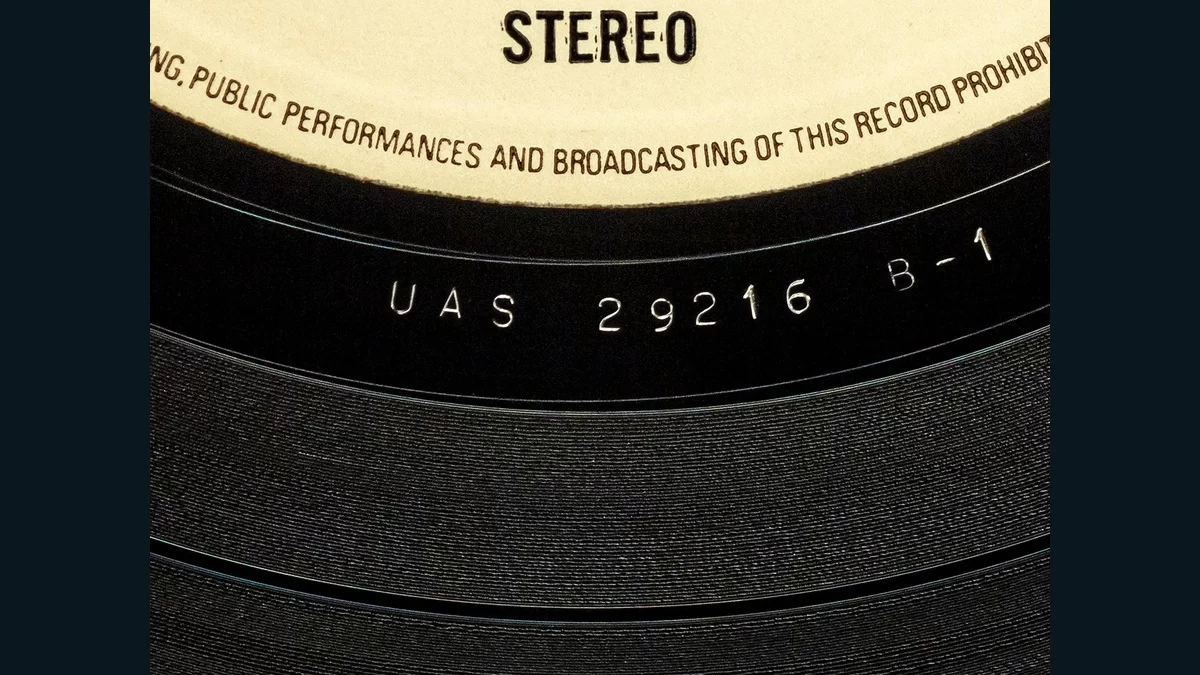
In the photograph above, “UAS 29216 B-1” is etched into the space between the label and the playing grooves. You can read that much from the image. The other side of this record is out of view, so the photograph cannot supply a complete pair of runout codes.
That is a useful place to begin an identification search. Copy the evidence you have and keep a space for what you haven’t seen. This is a source-based guide; MP3Raid hasn’t handled or played the pictured record. Photographer W.carter identifies it as a Diamonds Are Forever soundtrack LP, catalogue UAS 29216, photographed in May 2023. The photo date is not a pressing date.
Read one side, then turn it over
Collectors often call the area near the label the dead wax or runout. Letters, numbers, initials and symbols may be etched or stamped there. Change the angle of the light rather than trying to trace the lettering with anything sharp.
Discogs’ identifier guidelines explain that runout information can include engineer, studio or manufacturer details. They also distinguish a matrix printed on the label from one in the runout. If you copy both, label each location in your notes so you can tell them apart later.
Make a separate note for side A and side B. There may be several groups of marks around each side, so continue looking after the first number you recognise. A small logo elsewhere on the disc could be missing from your first transcription.
Keep a close-up of any character you can’t read. Is that a 1, an I or a scratch? Leave it unresolved until you have a better view. A candidate in a database can help you decide what to look at again, but it shouldn’t decide what you write down before you’ve checked.
Work through a two-sided match
Here is an invented example. Your notebook has “EXAMPLE 001 A-1” and “EXAMPLE 001 B-2”. A database result has the same A-side string, but its B-side ends B-1.
You have an agreement on one side and a question on the other. Compare the label pictures, catalogue number, format and packaging. Then look for a documented B-2 variant within that individual release entry. If the description still doesn’t fit, keep looking rather than choosing the nearest result.
Nothing in these fictional suffixes establishes a year or a factory. They are deliberately made-up strings for practising the comparison. The important part is the mismatched character and what you do with it.
For an actual Discogs submission, use its notation rules. Section 5.2.o asks contributors to keep each side’s runout together in one string. Capitalisation and punctuation matter; the guideline also covers crossed-out data and unidentifiable symbols. More complicated descriptions of the marks can go in the release notes. Consult those instructions before submitting rather than pasting private shorthand into the database.
Keep the unresolved detail in your collection notes
A B-2 difference might belong among the variants of an otherwise matching release. It might also be part of evidence for a different release. Discogs allows minor runout variants together, while significant differences involving a company, credit or job number can indicate a separate release. Its Database Forum is the suggested place to ask when the distinction is unclear.
For your own catalogue, “possible match; side B not confirmed” is a perfectly usable note. It tells you what to revisit. A precise year copied from an uncertain match would hide that problem from you the next time you open the entry.
You’ll still need to assess condition separately. These marks do not grade surface wear or tell you how this particular copy plays. They also serve a different purpose from the recording and composition identifiers in our ISRC and ISWC guide. Finish the physical identification first; claims about rarity, value or superior sound need their own evidence.