



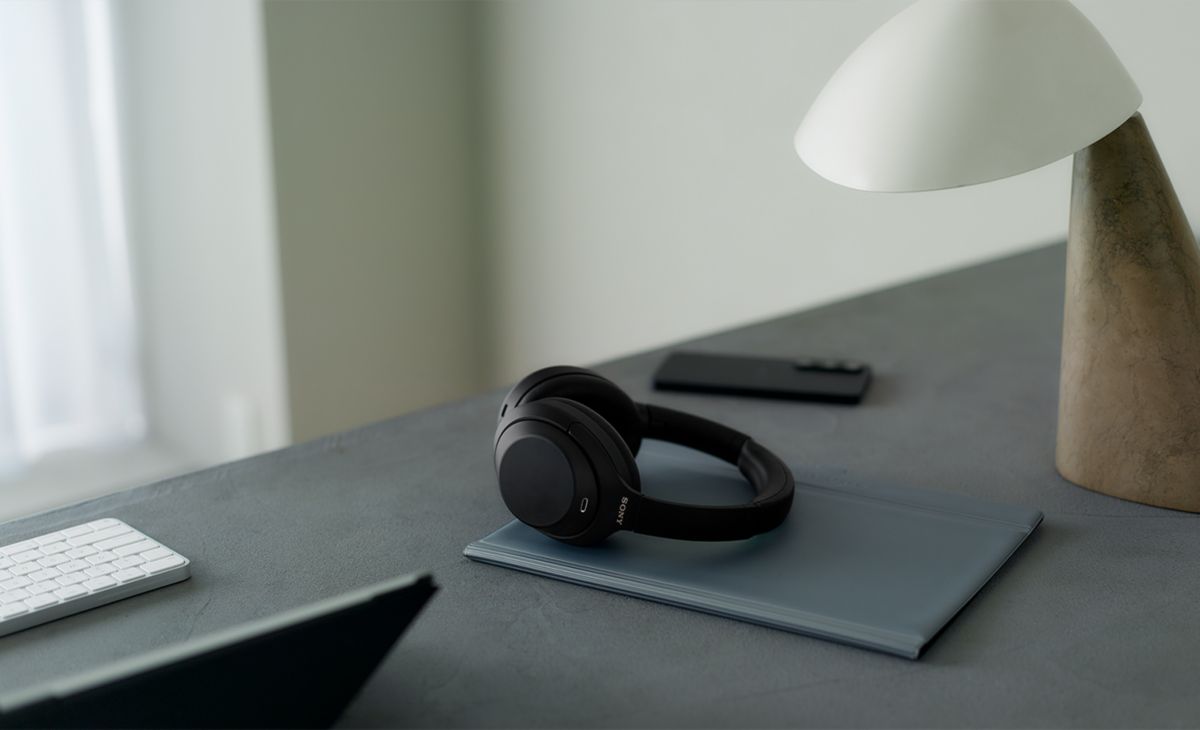
A phone, a laptop and a television make three devices. Sony's WH-1000XM4C multipoint feature connects two at once. That small piece of arithmetic is a better starting point for a buying decision than its long list of features: which two would you actually keep connected?
This assessment combines manufacturer documentation, an attributed outside physical review and our connection scenarios. The scenarios are illustrative; we have not tried the headphones with those devices.
Two everyday arrangements
Sony's product page describes two-device multipoint, a folding 253 g design, a supplied case and up to twenty-seven hours of playback under stated conditions.
In our first scenario, the listener works on a laptop and keeps a phone nearby for calls. That is a two-device requirement, so it fits the advertised connection count. The outstanding question is how calls interrupt laptop audio and how playback resumes. The count alone cannot answer that behaviour for a particular laptop and application.
In the second scenario, the listener adds a Bluetooth television in the evening. Three sources exceed the two simultaneous connections. One source must leave the connected pair or be switched by another supported method. Multipoint has not removed every reconnection job; it has removed a specific one between the two selected devices.
| Proposed pair | Remaining question |
|---|---|
| Laptop and phone | Call handling and resuming the selected application |
| Phone and television | Whether the television supports the intended connection |
| Laptop, phone and television | Which source to disconnect or switch |
Our CH730N and XM4C comparison considers other priorities, including weight and quoted duration. Those may matter more if your listening involves just one source.
EQ is a control, not a verdict
The XM4C's official sound feature page specifies a ten-band equaliser in Sound Connect. That gives the owner adjustment options. It does not establish that the default tuning suits every listener, nor that any proposed setting is universally better.
The same page quotes LDAC's maximum transfer rate as 990 kbps. That number describes a particular codec rate, not a guarantee that every wireless connection uses it. Selecting lossless audio in a streaming app and establishing the headphone connection are separate parts of the playback path. Our Apple Music lossless setup guide works through that distinction using Apple's supported arrangements.
What a physical review can contribute
What Hi-Fi?'s 5 October review reported comfortable wear, a musical presentation and effective noise cancellation. It identified battery duration as a relative weakness. These are that publication's findings, based on its testing and comparisons.
Comfort is the finding least easily transferred to a different head. A return policy or a suitable shop demonstration is still useful. For duration, start with the longest time you expect to spend away from charging, rather than treating a quoted maximum as a countdown clock.
Check the final model code
WH-1000XM4 and WH-1000XM4C are not interchangeable search terms when checking this purchase. Match the seller's suffix with the specification page and the review you read. An existing XM4 owner also has a different decision from a first-time buyer: identify the missing function before paying to replace a pair that already does the job.