



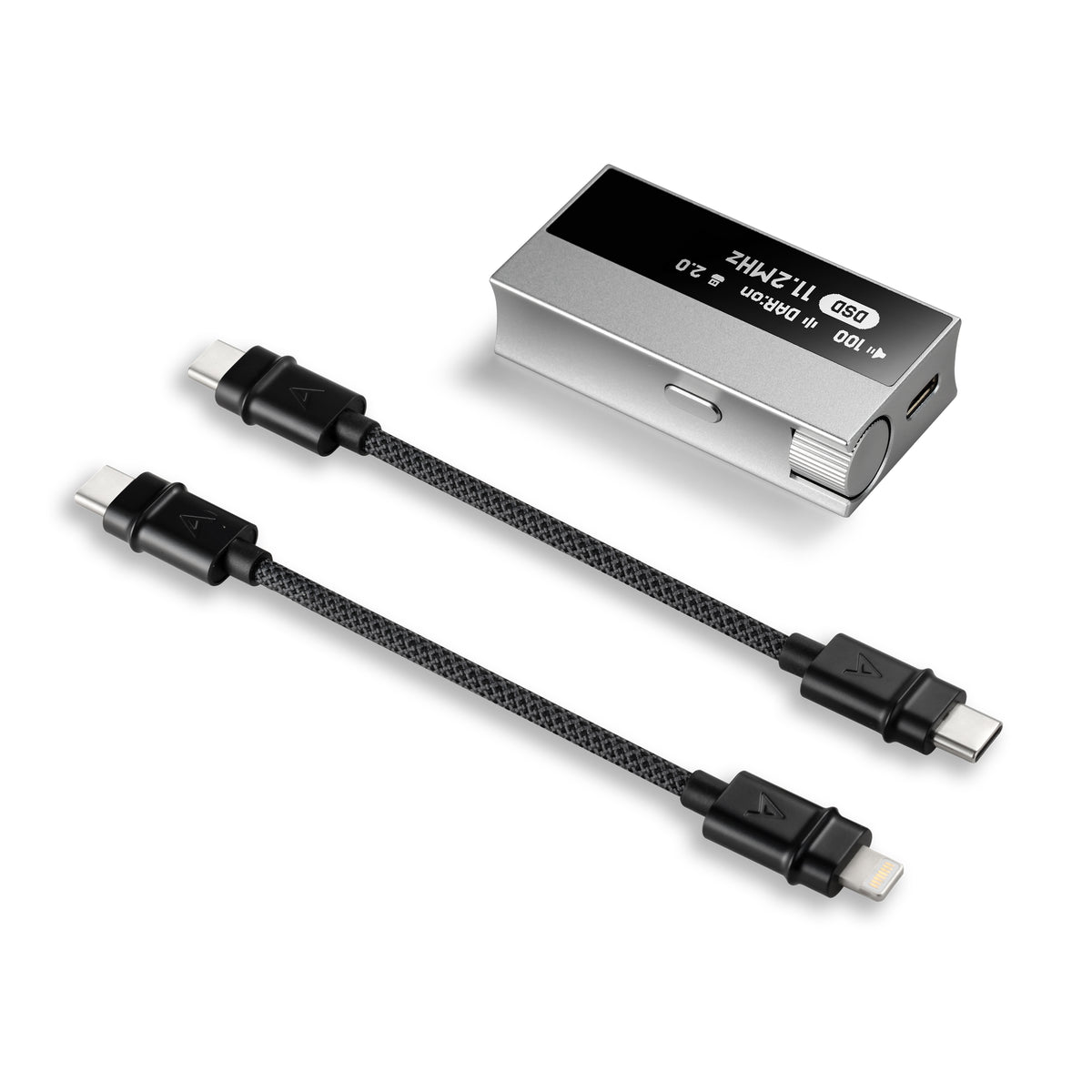
There is a £29 converter in one basket and a £39 package in another. The cheaper converter needs a £12 cable; the other includes a suitable one. In this hypothetical example, the totals are £41 and £39. The headline saving has disappeared before either basket is ready to use.
Those are invented prices for a comparison, rather than current offers. First establish that the package will work. Write down the phone or computer model, the headphones and the connection you intend to make. There is little point adding up a basket that cannot supply that connection.
A documented need comes before the shopping list
Apple's lossless instructions specify an external DAC for iPhone and iPad playback above 48 kHz. That is a requirement tied to a particular device and sample-rate case. The same document identifies native playback up to 96 kHz for the specified 14-inch and 16-inch MacBook Pro models.
Those cases lead to different accessory decisions. Apply the instructions to the equipment you own and the output you intend to use. “It has USB-C” does not describe the complete arrangement. Our Apple Music setup guide separates the platform instructions and existing-download question.
Count the missing parts
Once both packages meet the intended requirement, list the parts needed to use them. Our hypothetical comparison assumes the cable in each arrangement does the same required job:
| Item | Package A | Package B |
|---|---|---|
| Converter price in this example | £29 | £39 |
| Required cable | £12 separately | Included |
| Subtotal before other charges | £41 | £39 |
Package A begins £10 cheaper and ends £2 dearer. The £12 cable changes the result. Delivery, taxes, other accessories and applicable checkout terms have deliberately been left out; actual offers need those costs added before a final comparison.
The table also assumes that a required cable is missing. If you already own a suitable cable, that assumption changes. Its specification still needs checking: using an existing part is useful only if it supports the intended arrangement.
Write the requirement in one sentence
“Phone model, operating system, converter model, connection and headphone input” is a practical line to complete. Compare it with the device and accessory manufacturers' information. A vague promise of better sound cannot fill a missing compatibility detail.
Power arrangements belong in that check too. Identify whether the proposed accessory takes power from the host or needs another supply or charging routine. We have not physically tested a selection of converters here; this is a buying procedure based on documentation and an illustrative calculation.
A converter cannot repair the source file
A higher supported sample rate does not restore information discarded from an old MP3. Our format guide explains that source limitation. The audio-units guide separates bitrate, sample rate and bit depth.
Before checkout, read that short equipment line again and account for every required part. Then add the delivery and other charges that apply to the real offer. Keep your existing source files: buying a converter is no reason to replace them with larger files that contain no extra musical information.